A Little Kit with Big Possibilities
So...I recently ordered an art kit from ArtMate, but after giving it some thought, I realized it just wasn't the right fit for me. Fortunately, my mom is also a painter, so I passed it along to her. I know she'll put it to good use.
Instead, I ordered a different art kit along with the matching leather case, and I absolutely love it. I can't wait to take it with me and start painting tiny watercolor pieces.
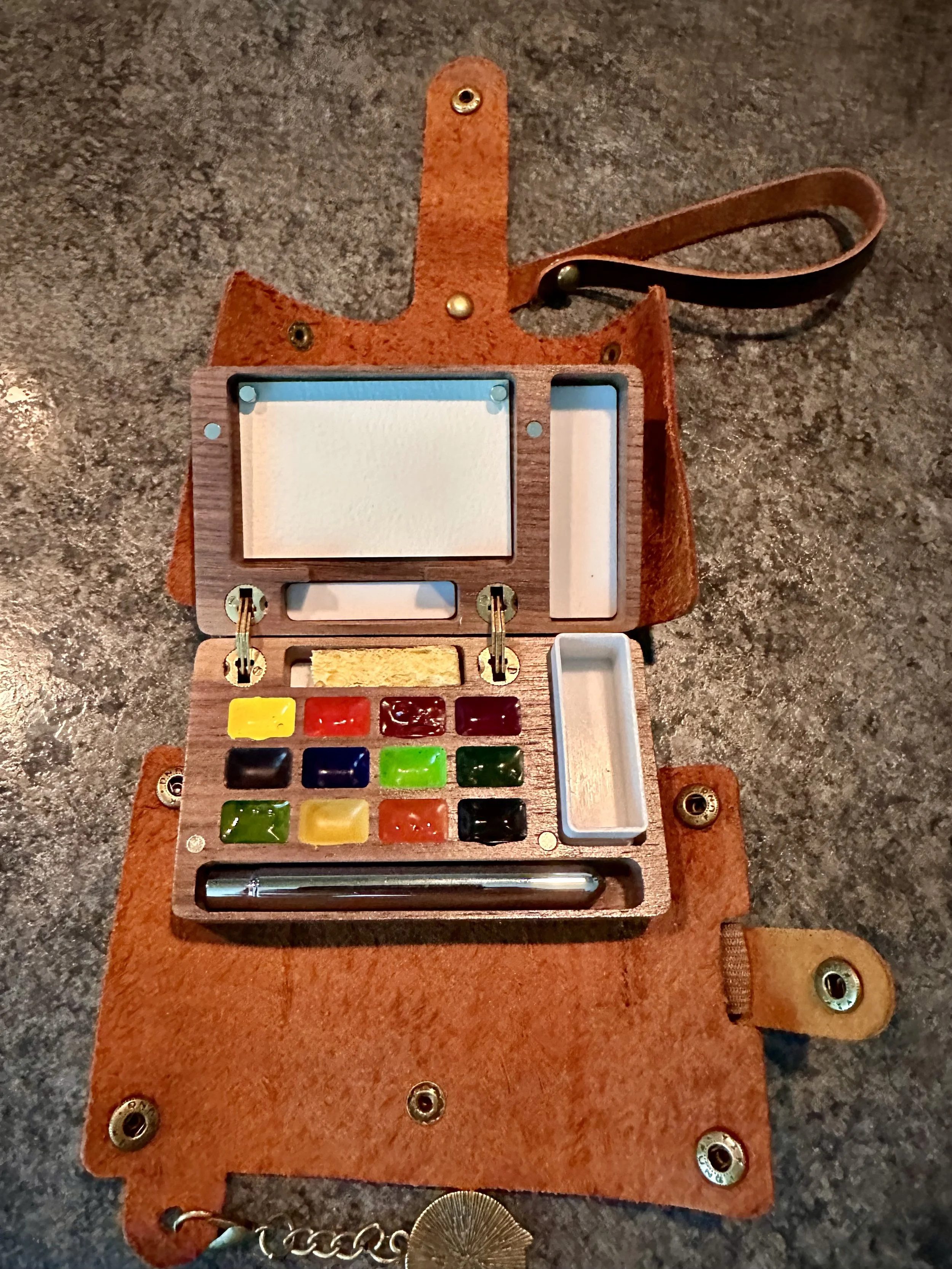
The Walnut Watercolor Kit with the accompanying leather case.
I also wanted to give a shout-out to the people at ArtMate. Somehow, I misplaced my order confirmation email, and Cynthia was incredibly helpful. She quickly tracked down my order and made sure everything was taken care of. It's always refreshing to receive such kind and attentive customer service. It made the whole experience a very positive one.
More later...
One Session at a Time
So...I have discovered that Written Exposure Therapy is incredibly difficult. It asks you to revisit painful memories that you have spent years trying to avoid. While I know that processing trauma is an important part of recovery, it doesn't make the process any easier.
So far, I have completed two writing sessions. They brought up so much anxiety and suicidal ideation that I needed additional support. I ended up spending two days at EmPATH at Fairview Hospital. I was in crisis, and I needed a safe place to stabilize. The staff there did an excellent job of helping me reset, calm down, and get back on my feet.
On Tuesday, I will begin writing again. I don't know exactly how it will go, but I do know that recovery often means continuing forward even when the path is difficult. I'll take it one session at a time.
More later...
THINKING SMALL
So…I love painting and creating little pieces of art (you can check out my Little People page), so I thought it would be fun to combine those interests and try my hand at "Tiny Painting."
My mom recently gave me The Big Book of Tiny Painting by Leslie Stroz (thanks, Mom!), and it inspired me to dive into this miniature world. I also discovered some wonderful tiny watercolor kits at ArtMate and recently picked up one that looked perfect for getting started.
There is something appealing about creating art on such a small scale. Tiny paintings seem like little windows into bigger worlds, and I am excited to see where this new creative adventure takes me.
I can't wait to give it a try, and of course, I'll share the results with you when I do!
More later…
Sometimes We Forget
So…When we are struggling with our mental health, it is easy to forget to celebrate the victories we have achieved. Depression, anxiety, and trauma can act like blinders, narrowing our focus until all we can see is pain and exhaustion. The difficult feelings become so overwhelming that it seems impossible to recognize how far we have come. Some days feel so dark that there appears to be no joy and no way beyond the hurt.
Today feels a little lighter.
A friend recently reminded me that I have come a long way in this journey. Since January, I have been to EmPATH, Depression Recovery PHP, Depression Recovery Residential, and Trauma PHP. Along the way, I have learned DBT skills, explored CBT concepts, and begun the difficult work of facing the traumas in my life. None of it has been easy. There have been setbacks, painful moments, and days when I wondered if I was making any progress at all.
But I am not the same person who walked into EmPATH on January 26th in crisis.
My journey is far from over, and I know there will be more challenges ahead. There will be difficult feelings and setbacks because recovery is rarely a straight line. But today I can see something that is easy to miss when I am hurting: there has been progress. I have developed skills I can rely on, and I have been blessed with a strong and caring support network. To all of the people who have walked beside me, encouraged me, and supported me, thank you.
Today, at least for a little while, I can see hope. I can see that there is a way forward, and I believe I am headed in the right direction.
If you are on your own mental health journey, I hope you will take a moment to celebrate your victories too. They do not have to be dramatic. Sometimes simply getting out of bed, asking for help, using a skill, or making it through a hard day is worth celebrating. Progress may be slow, and it may come with setbacks, but progress is still progress.
And that is something worth celebrating.
More Later…
What to do When…
So…Since beginning this recovery journey, my partner has sometimes found it difficult to understand and support some of the maladaptive behaviors I struggle with. Recovery can be challenging not only for the person who is suffering, but also for the people who care about them.
Having a strong support network is important. Supportive friends, family members, and loved ones can help keep us grounded and provide encouragement when emotions become overwhelming. I know the people in my life want the best for me and genuinely care about my well-being.
The challenge is that many people do not know how to respond to self-harm or suicidal ideation. These topics can be frightening, confusing, and uncomfortable to talk about. As a result, loved ones may feel unsure of what to say or do, even when they want to help. Learning how to support someone who is struggling can make a significant difference in their recovery and remind them that they do not have to face their pain alone.
Self-harm
Supporting someone who self-harms can be challenging, but your presence, compassion, and patience can make a meaningful difference.
What You Can Do
Listen without judgment.
Stay calm if they tell you they self-harm.
Let them share as much or as little as they want.
Avoid reacting with shock, anger, or disappointment.
You might say:
"Thank you for telling me."
"I'm glad you trusted me with this."
"I'm here to listen."
"That sounds really painful."
Validate their feelings.
You don't have to agree with self-harm to acknowledge their emotional pain.
For example:
"It sounds like you've been carrying a lot."
"I can see that you're hurting."
"That must be exhausting to deal with."
Encourage professional support.
Self-harm is often a sign that someone is struggling with overwhelming emotions and could benefit from additional help.
You might ask:
"Have you talked with a therapist about this?"
"Would you like help finding support?"
"Would it help if I sat with you while you made a call or sent a message?"
Help them identify coping skills.
Different skills work for different people, but possibilities include:
Going for a walk
Calling or texting a trusted person
Journaling
Drawing or creating art
Holding ice cubes
Using grounding exercises
Practicing breathing or mindfulness techniques
Using skills from therapies such as DBT
Check in regularly.
Recovery is rarely a straight line. A simple text such as, "Thinking of you today—how are you doing?" can remind someone they are not alone.
What to Avoid
Don't shame, criticize, or punish them.
Don't demand promises like "Never do it again."
Don't make the conversation about your fear or frustration.
Don't assume they are seeking attention. Self-harm is usually an attempt to cope with intense emotional distress.
If There Is Immediate Danger
If they have injured themselves seriously, are talking about ending their life, have a suicide plan, or you believe they are in immediate danger, seek emergency help right away.
In the United States:
Call 911 for an immediate emergency.
Call or text 988 to reach the Suicide & Crisis Lifeline.
Remember
You can be a source of support, but you cannot be their therapist or carry responsibility for their recovery. The most helpful role is often to be a caring, consistent person who listens, validates, and encourages them to get the help they need.
A simple message like, "I care about you, and you don't have to go through this alone," can be more powerful than trying to find the perfect solution.
Suicidal Ideation
If someone is experiencing suicidal ideation, one of the most important things you can do is take them seriously, listen with compassion, and help them connect with support.
Listen and Be Present
Often, people who are struggling need to feel heard more than they need advice.
You might say:
"I'm glad you told me."
"That sounds incredibly painful."
"You don't have to carry this alone."
"I'm here with you."
Avoid minimizing their feelings with statements like:
"You have so much to live for."
"Others have it worse."
"Just think positive."
Even when well-intended, these responses can make someone feel misunderstood.
Ask Directly About Safety
It is a myth that asking about suicide puts the idea into someone's head. If you are concerned, it is okay to ask directly:
"Are you thinking about suicide?"
"Have you thought about how you would do it?"
"Do you have a plan?"
These questions can help you understand the level of risk and show that you are willing to talk openly.
Encourage Professional Support
Help them connect with:
A therapist or counselor
A psychiatrist
Their primary care provider
A crisis line
You can offer practical help, such as:
Sitting with them while they make a call
Helping them schedule an appointment
Driving them to an appointment if appropriate
Stay Connected
Isolation can make suicidal thoughts worse.
Consider:
Checking in regularly by text or phone
Inviting them for a walk, coffee, or another low-pressure activity
Reminding them that they matter to you
Simple messages can be powerful:
"I've been thinking about you."
"How are things today?"
"You don't need to go through this by yourself."
Help Them Use Their Existing Coping Skills
If they are already in treatment, encourage them to use the skills they have learned, such as:
Reaching out to supportive people
Grounding techniques
DBT distress-tolerance skills
Mindfulness exercises
Safety plans created with their therapist
Know When to Seek Emergency Help
If they:
Have a specific suicide plan,
Have access to the means to carry it out,
Express intent to act soon,
Or cannot commit to staying safe, treat it as an emergency.
In the United States:
Call 911 or local emergency services if there is immediate danger.
Call or text 988 for crisis support and guidance.
Take Care of Yourself Too
Supporting someone with suicidal thoughts can be emotionally demanding. It is okay to seek support for yourself, set healthy boundaries, and recognize that you cannot single-handedly keep another person safe.
The most valuable message you can often give is:
"I care about you. I'm glad you told me. Let's figure out the next step together."
More Later…
Learning SELF-Compassion
So...one thing I have been working on lately is self-compassion. If I'm being honest, it doesn't come naturally to me. I often bombard myself with negative self-talk and find it difficult to offer myself the same kindness and understanding that I would readily give to someone else. The truth is, I really need more self-compassion in my life.
Self-compassion is the practice of treating yourself with the same kindness, care, and understanding that you would offer a good friend during a difficult time. According to psychologist Dr. Kristin Neff, self-compassion has three core components:
Self-Kindness vs. Self-Judgment
Being gentle and understanding with yourself instead of criticizing yourself harshly when you make mistakes or feel inadequate.
Common Humanity vs. Isolation
Recognizing that suffering, failure, and imperfection are part of the shared human experience. We all struggle, and none of us are alone in our pain.
Mindfulness vs. Over-Identification
Acknowledging difficult thoughts and emotions without judging them or becoming overwhelmed by them.
I have found this practice challenging. When my anxiety increases, it becomes difficult to see anything positive about myself. My inner critic gets loud, and kindness is often the first thing to disappear. The good news is that self-compassion is a skill, and like any skill, it can be learned and strengthened through practice.
One of the ways I am practicing self-compassion is by writing three self-compassion statements every day. Dr. Neff's framework provides a simple structure:
1. Mindfulness: Notice What You're Feeling
I am feeling ______.
This is a moment of ______.
2. Common Humanity: Remember You Are Not Alone
It makes sense that I feel this way because ______.
Many people experience ______.
I am not alone in this.
3. Self-Kindness: Offer Yourself Compassion
I can be kind to myself by ______.
What I need right now is ______.
May I give myself the same kindness I would give a friend.
A simple self-compassion statement might look like this:
"I am feeling ______. It makes sense that I feel this way because ______. I am not alone in this struggle. I can be kind to myself by ______."
For example:
"I am feeling lonely. It makes sense that I feel this way because I have been spending a lot of time by myself lately. I am not alone in feeling lonely; many people experience this. I can be kind to myself by reaching out to a friend and reminding myself that this feeling will pass."
Learning self-compassion is not easy, especially if you have spent years criticizing yourself. However, it is an important skill. Research has shown that self-compassion can reduce stress, improve emotional well-being, and even increase motivation.
As I continue my recovery journey, I am committed to practicing self-compassion and giving myself the grace that I so often give to others. Some days will be easier than others, but I will keep trying.
If you struggle with self-compassion too, know that you are not alone. It is a skill that can be learned, one kind thought at a time.
Self-Compassion Links
The Power of Self-Compassion | Harvard Health
What is Self-Compassion? | Self-Compassion Institute
Self-Compassion | Center for Clinical Interventions | Government of Western Australia
Self-Compassion | Wikipedia
Practicing Self-Compassion | American Psychiatric Association
How to Practice Self-Compassion: 8 Techniques and Tips | PositivePsychology.com
ANNA?
Dear Anna,
I haven't heard from you in a while, and I hope you are doing well.
I've been having some struggles of my own lately, but I am working hard to get through them. The last time we talked, you were getting ready for discharge. I hope everything went smoothly. I remember how anxious you were about it, and I completely understand. I felt the same way when I discharged. It's a difficult transition, and it takes time to adjust.
I hope you're finding your footing and taking things one day at a time. You are incredibly capable, intelligent, and resilient. I know you have the strength to make it through the challenges that come with recovery.
You once told me that we were in this together, and I want you to know that I still feel the same way. Even though we may not be in touch right now, I am thinking about you and wishing you the very best. If you happen to read this, please know that I am rooting for you and your recovery every step of the way.
Take care of yourself.
Your friend,
David
17 Feet of Feelings
So…while I was in residential treatment, we had Art Therapy, and one of the projects I was assigned was called The Coping Wheel of Emotions. You can read more about the project here. I finally had some time to take pictures, and I wanted to share the finished book with you.
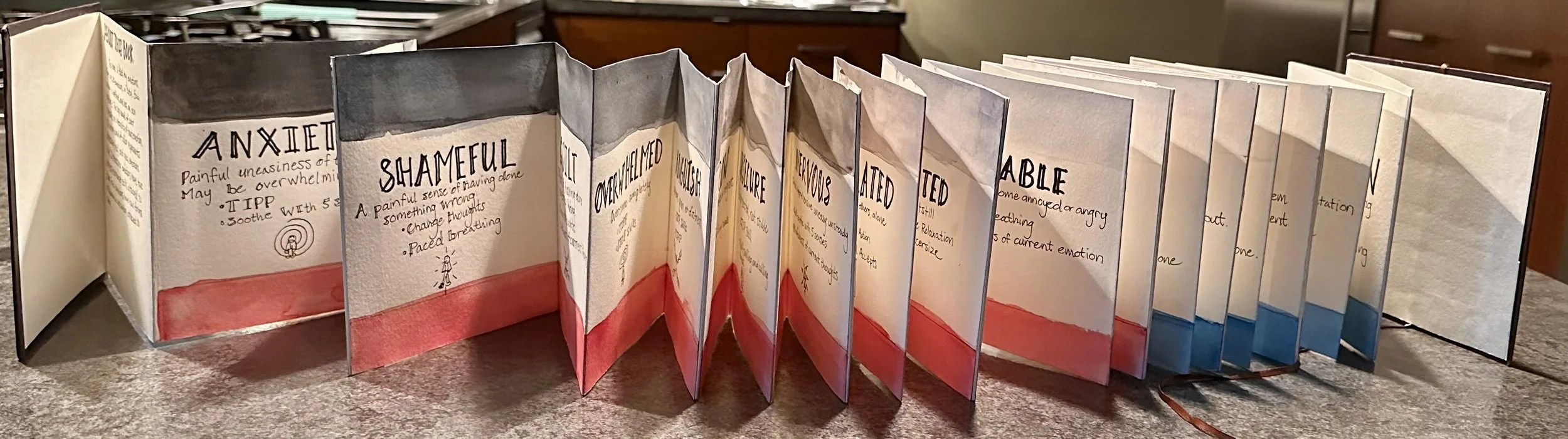
17 feet of Emotions.
The pages are made from watercolor paper, while the covers are constructed from cardboard and construction paper. Because of safety restrictions in residential treatment, I wasn't allowed to use an X-Acto knife, so I had to cut everything with scissors. As a result, some of the pages aren't perfectly square or exactly the same height.
I'll admit that bothered me a little. But it also gave me an opportunity to practice radical acceptance. The book isn't perfect, but it is the best I could make with the tools and materials I had available at the time.
When fully unfolded, the book stretches an impressive 17 feet long.
I used two color systems throughout the book. At the top of each page, you'll see a gradient that moves from dark to light. At the bottom of each page, I used red and blue to categorize the emotions. Red represents a distressing emotion, while blue represents a goal emotion.
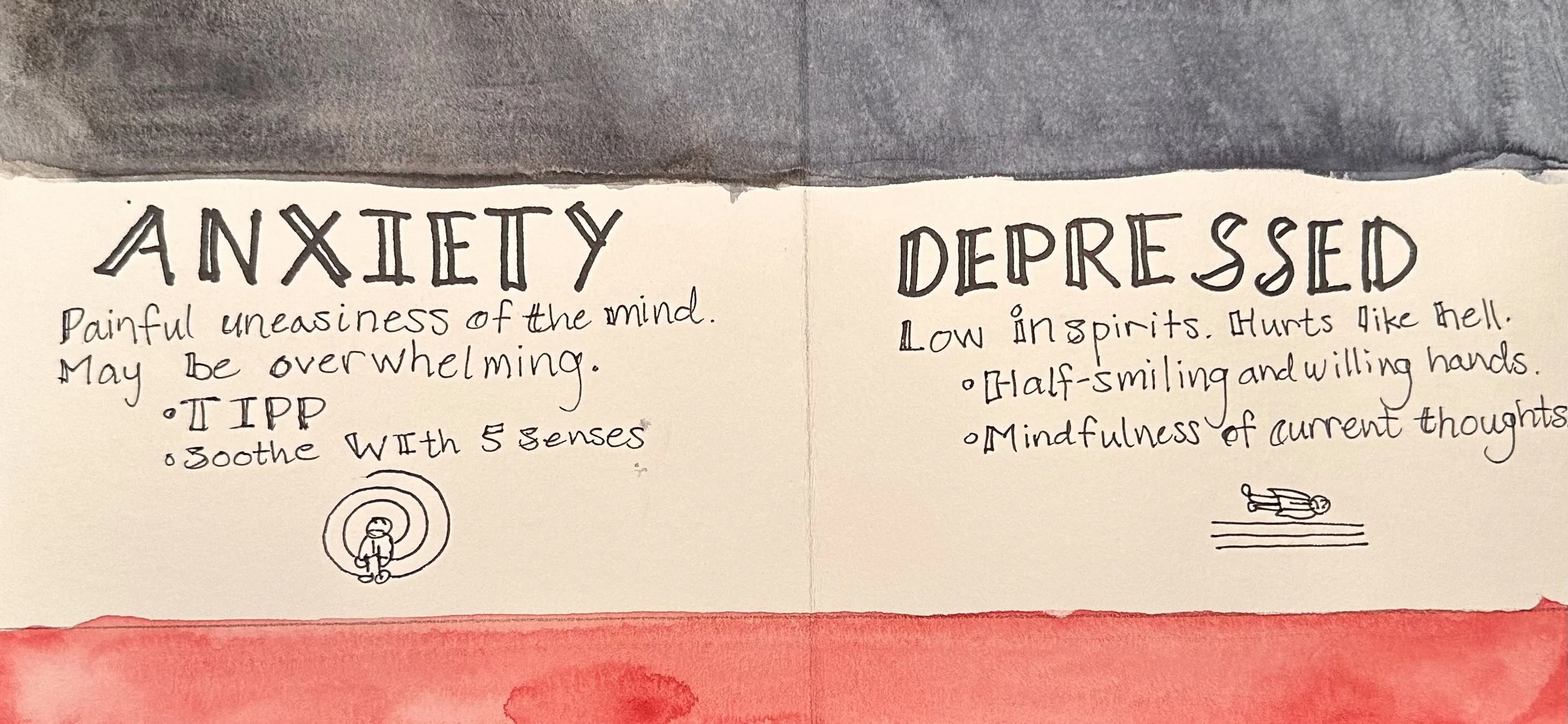
Pages from the Emotions Book.
For each distressing emotion, I included DBT skills that can help reduce or manage that feeling. For each goal emotion, I listed activities or actions that may help evoke that emotional state. Every page also contains a definition of the emotion and a small "Little People" illustration to accompany it.
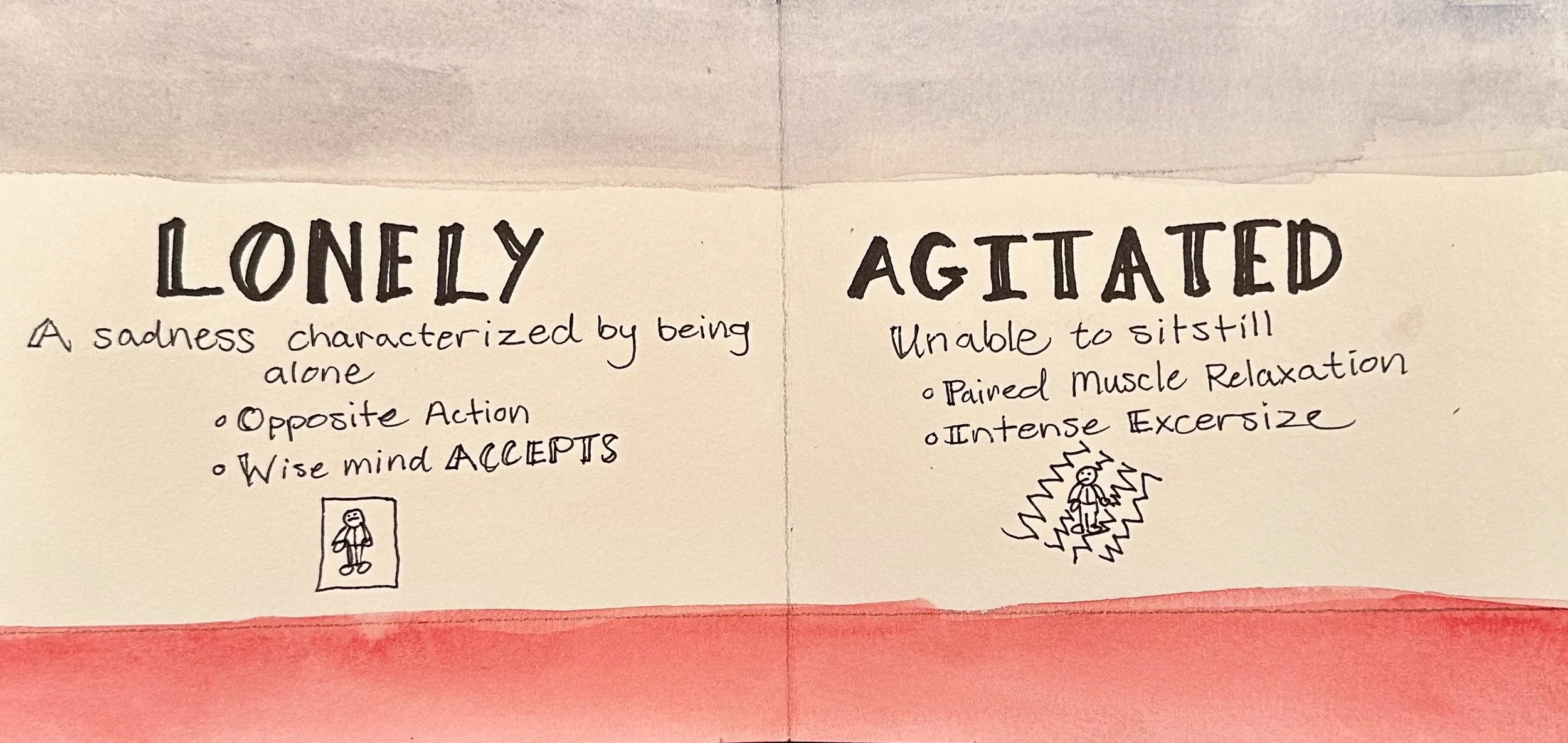
Pages from the Emotions Book
Overall, I'm really happy with how it turned out. It was a challenging project, but it taught me a lot about emotions, coping skills, and accepting imperfections. I think it came together beautifully.
The Hard Part of Coming Home
Possible Trigger Warning: This post discusses self-harm urges and recovery.
I am not recommending self-harm as a coping mechanism. Self-harm is often a sign that additional support is needed. If you are struggling, call or text 988, or text "HOME" to 741741 to connect with someone who can help.
So...
Lately, I have been dealing with some very difficult thoughts. They have been hard to manage, and I have been relying heavily on my DBT skills to help me get through them.
I've spent a lot of time wondering why my urges have become so intense. When I first came home from residential treatment, I was doing fairly well. I had made progress and built some momentum in addressing my depression, anxiety, and trauma. The urges were still there, but they felt manageable.
Now, it feels like I am fighting for my life.
Recently, it occurred to me that there may be a reason for this. Every day in PHP (Partial Hospitalization Program), I am actively confronting my trauma and anxiety. That work is important, but it is also exhausting. At the same time, life at home is very different from life in residential treatment.
Residential treatment is a safe and highly structured environment. There are no sharps readily available, daily routines are established, and self-harm is much more difficult to act on. That's not to say it never happens there, but the environment provides many layers of protection and support.
At home, those safeguards are gone. Since returning, I have tried to jump back into the routines and responsibilities of everyday life. I am trying my best, but often I feel like I am falling short. Sometimes I wonder if I am strong enough.
More than anything, I want the urges to quiet down. I know they may never disappear completely, but even a little relief would be welcome. I am tired of fighting. I am tired of feeling this way. This has been a lifelong struggle, and there are days when the weight of it feels overwhelming.
What I want most is to feel capable of managing my emotions and urges without feeling like I am constantly battling them. I want to trust myself. I want to believe that recovery is possible.
Tomorrow is another day. Maybe it won't feel as dark as the last few days have felt. Maybe I will find a little more strength, a little more hope, and a little more peace.
For today, I will keep going.
I can do this.
And if you're struggling too, you can do this.
Suicidal Tendencies
I have been dealing with a lot lately, and I have been using my DBT skills to manage the intense urges that keep coming up. So far, I haven't acted on them, and I am proud of that. At the same time, I am exhausted from feeling this way all the time.
I want to get these urges under control. I want to feel normal. This has been a lifelong battle, and lately, it feels like I am losing.
Since January 26, 2026, I have been to EmPATH, completed residential treatment, and participated in a trauma PHP. I have put in a tremendous amount of effort, yet I still feel much the same as I did when this journey began. Sometimes it makes me wonder if any of it is working.
The truth is, I am trying. I am trying every day. But it is hard. I feel deeply sad, and even the simplest tasks can require an enormous amount of energy. Some days, just getting through the day feels like a victory.
Lately, I have noticed myself losing hope, and that is a difficult place to be. Hope is often what keeps us moving forward when progress feels invisible.
Even so, I know I have to keep trying. I have to keep using my skills, taking things one day at a time, and pushing through the moments when it feels impossible. Recovery is rarely a straight line, and sometimes the progress we make is harder to see than we would like.
For now, I am holding on to the possibility that tomorrow might feel a little better than today.
Call or text 988 | 988 Lifeline
Text “Home” to 741741 | Crisis Text Line
Self-Harm and hope
Self-harm is more common than many people realize. Unfortunately, I know this firsthand because it is something I struggle with myself.
According to the Mayo Clinic, self-injury—often called nonsuicidal self-injury (NSSI)—is the act of intentionally harming your own body, such as through cutting or burning. It is typically not a suicide attempt. Instead, it is often used as a way to cope with overwhelming emotional pain, sadness, anger, stress, or other difficult feelings.
While self-harm may provide a temporary sense of relief or release, that relief is usually short-lived. Feelings of guilt, shame, and emotional distress often return, creating a painful cycle that can be difficult to break. Although most people who self-harm do not intend to cause life-threatening injuries, the behavior can still result in serious harm.
Self-harm affects people from all walks of life, but certain groups experience higher rates than others:
Adults: About 5% of adults report having engaged in self-harm at some point in their lives.
Teenagers: Adolescents have the highest rates of self-injury, with approximately 17% reporting that they have self-harmed at least once.
College Students: Studies suggest that around 15% of college students have engaged in self-harming behaviors.
Women and Men: Women are generally more likely to report self-harm, but men may account for at least 35% of all cases. Experts believe self-harm among men is often underreported.
Sexual Minorities: Individuals who identify as gay, lesbian, or bisexual are at increased risk. Some studies have found especially high rates among bisexual women.
These statistics remind us that self-harm is not rare, and many people are struggling silently.
So, what can you do if you or someone you care about is struggling with self-harm?
The good news is that help is available. Recovery is possible, and there are many resources, treatments, and support systems that can help people learn healthier ways to cope with emotional pain. In the next section, I'll share some of the resources and strategies that have helped me and others on the journey toward healing.
Supporting a Partner Who Self-Harms | Nicole Arzt Medium.com
Self-Harm - Causes, Warning Signs, and Symptoms | Health Direct (AU)
Someone I Care About is Harming Themselves | Mental Health America
Text HOME to 741741 to connect with a live volunteer Crisis Counselor | Crisis Text Line
More Little People
So…In my spare time between exposures, I have been drawing Little People pictures. For those unfamiliar, exposure therapy is a core component of Cognitive Behavioral Therapy (CBT) and is often used to help people face fears, trauma, and anxiety in a safe and structured way.
According to the American Psychological Association, exposure therapy is:
“A psychological treatment that was developed to help people confront their fears. When people are fearful of something, they tend to avoid the feared objects, activities, or situations. Although this avoidance might help reduce feelings of fear in the short term, over the long term it can make the fear become even worse. In such situations, a psychologist might recommend a program of exposure therapy in order to help break the pattern of avoidance and fear. In this form of therapy, psychologists create a safe environment in which to ‘expose’ individuals to the things they fear and avoid. The exposure to the feared objects, activities, or situations in a safe environment helps reduce fear and decrease avoidance.”
Exposure therapy can be emotionally exhausting, and after each exposure, I have found that drawing helps me calm down and regulate my emotions. It gives me something creative and grounding to focus on after doing difficult therapeutic work.
As an added bonus, it has led to some pretty cool pictures. Here are the latest additions to my Little People collection.
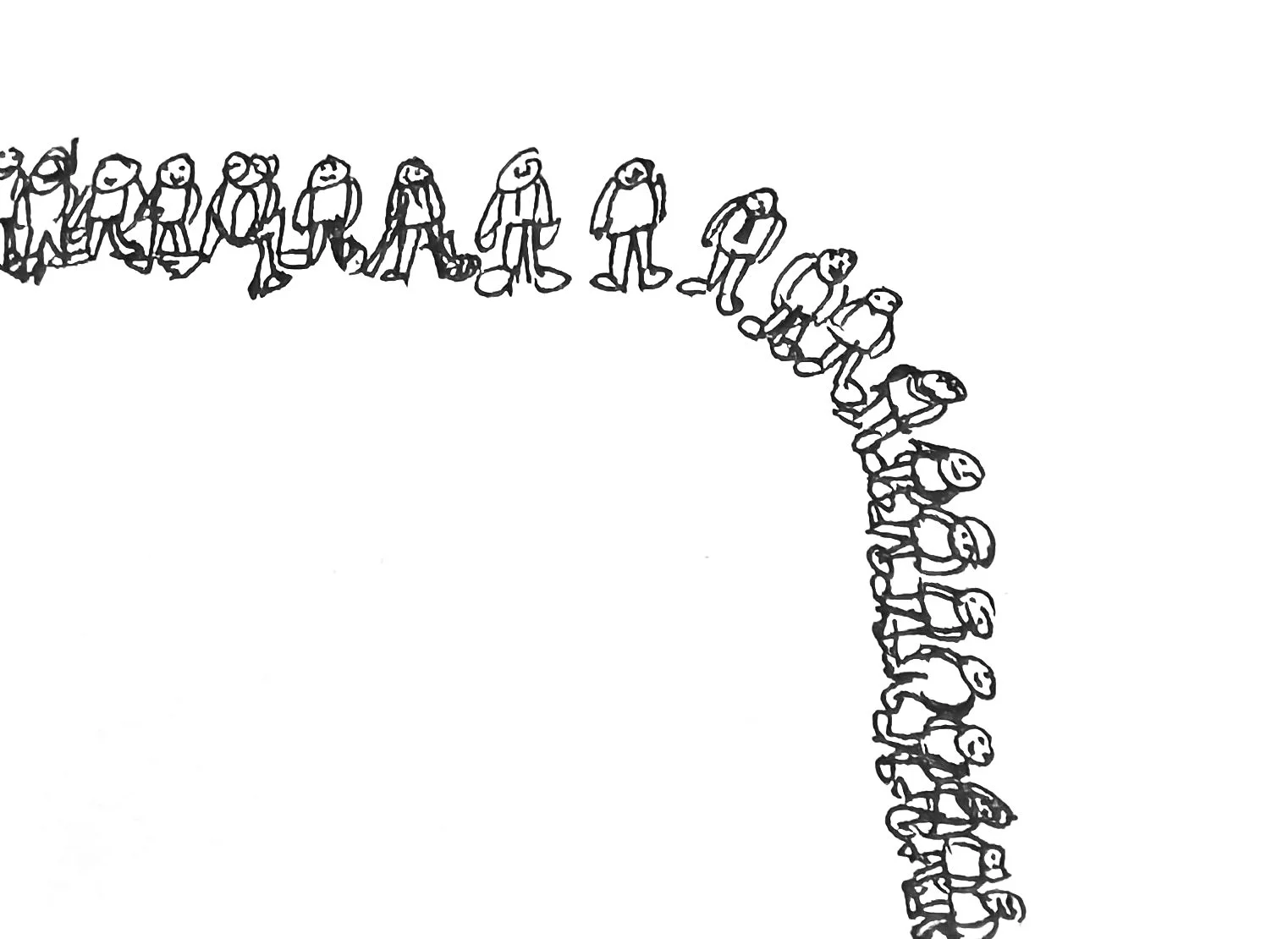
Little People and a frog.
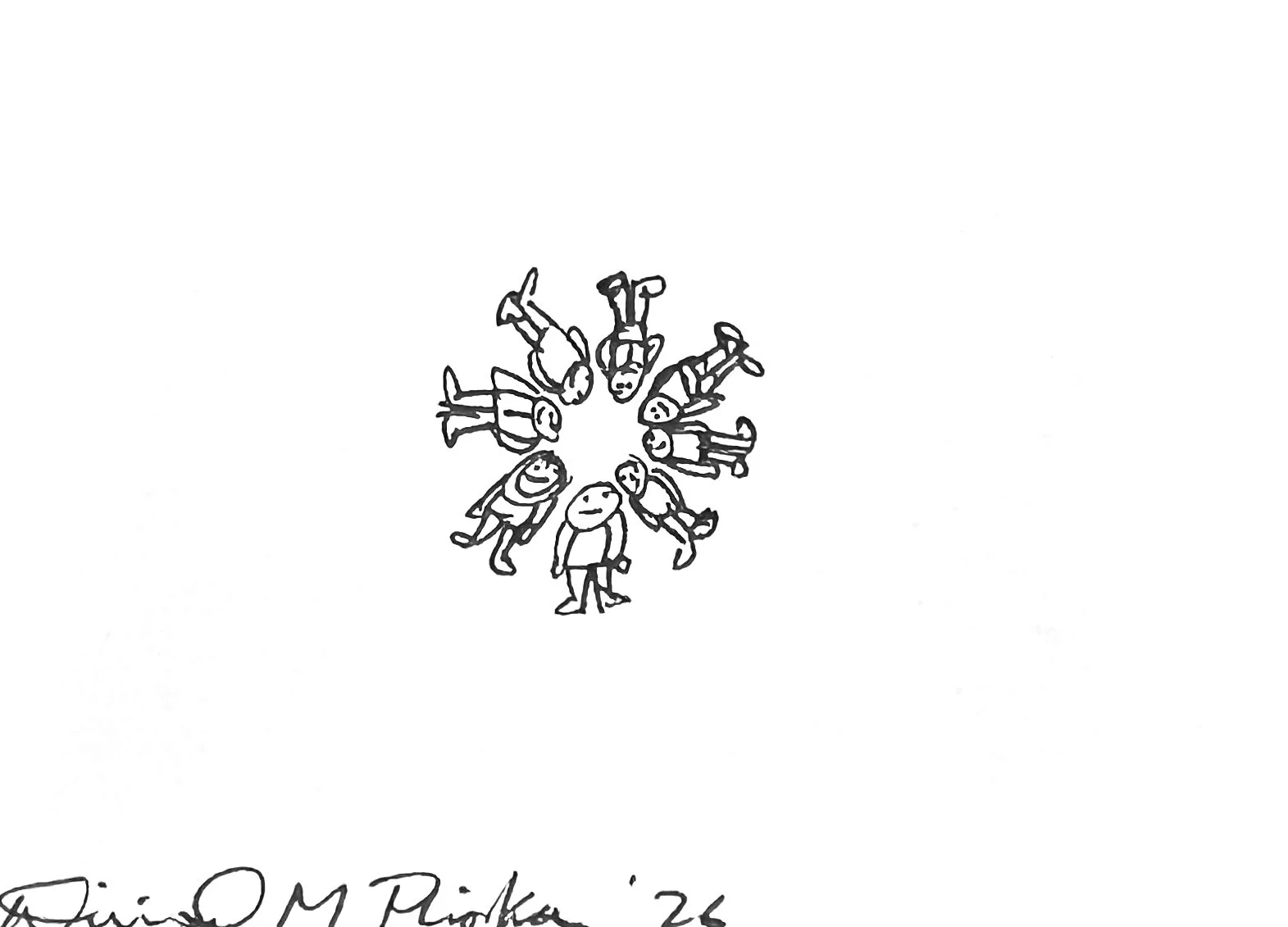
Little People in a Circle.
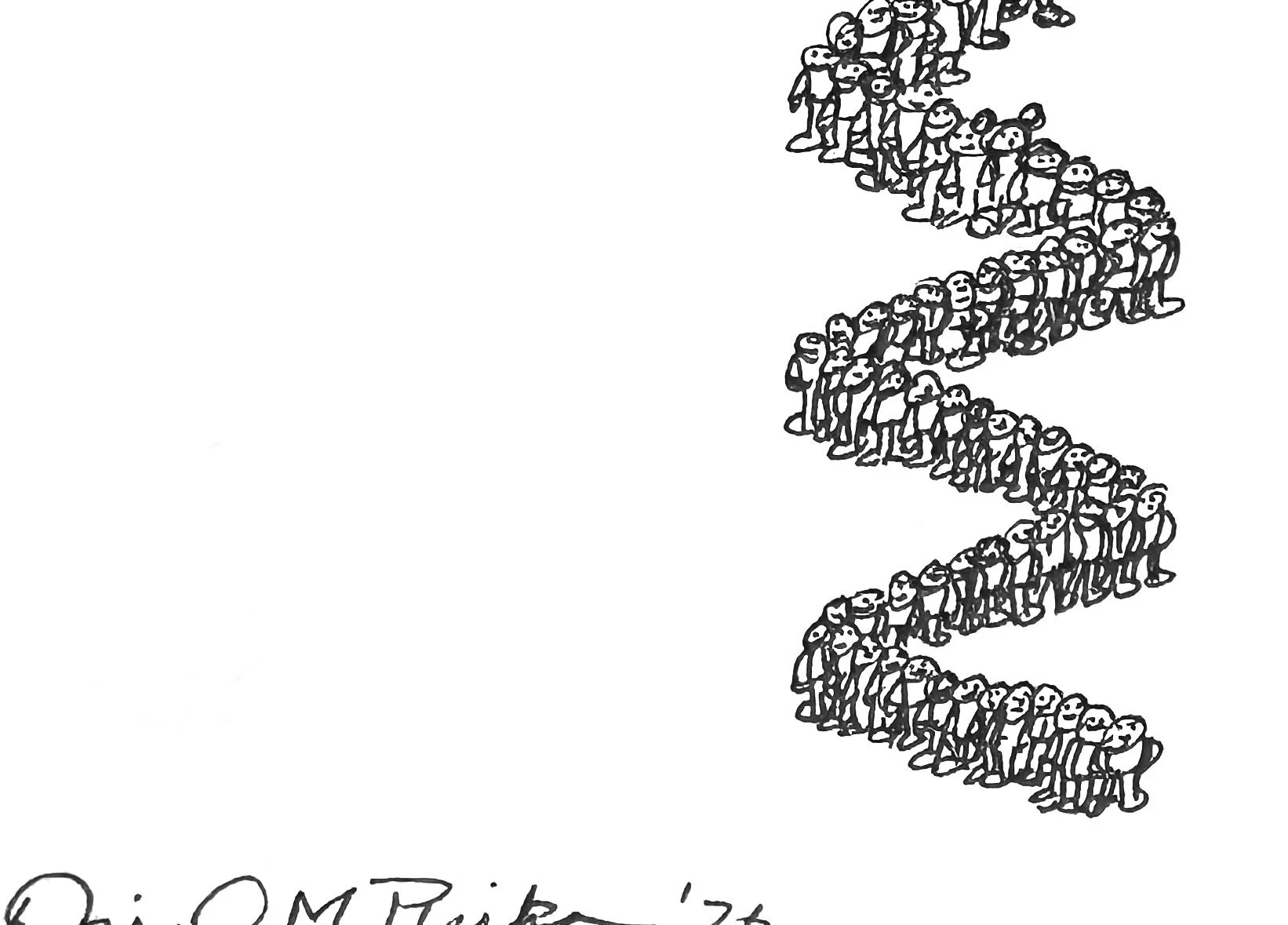
Little People in a Zigzag.
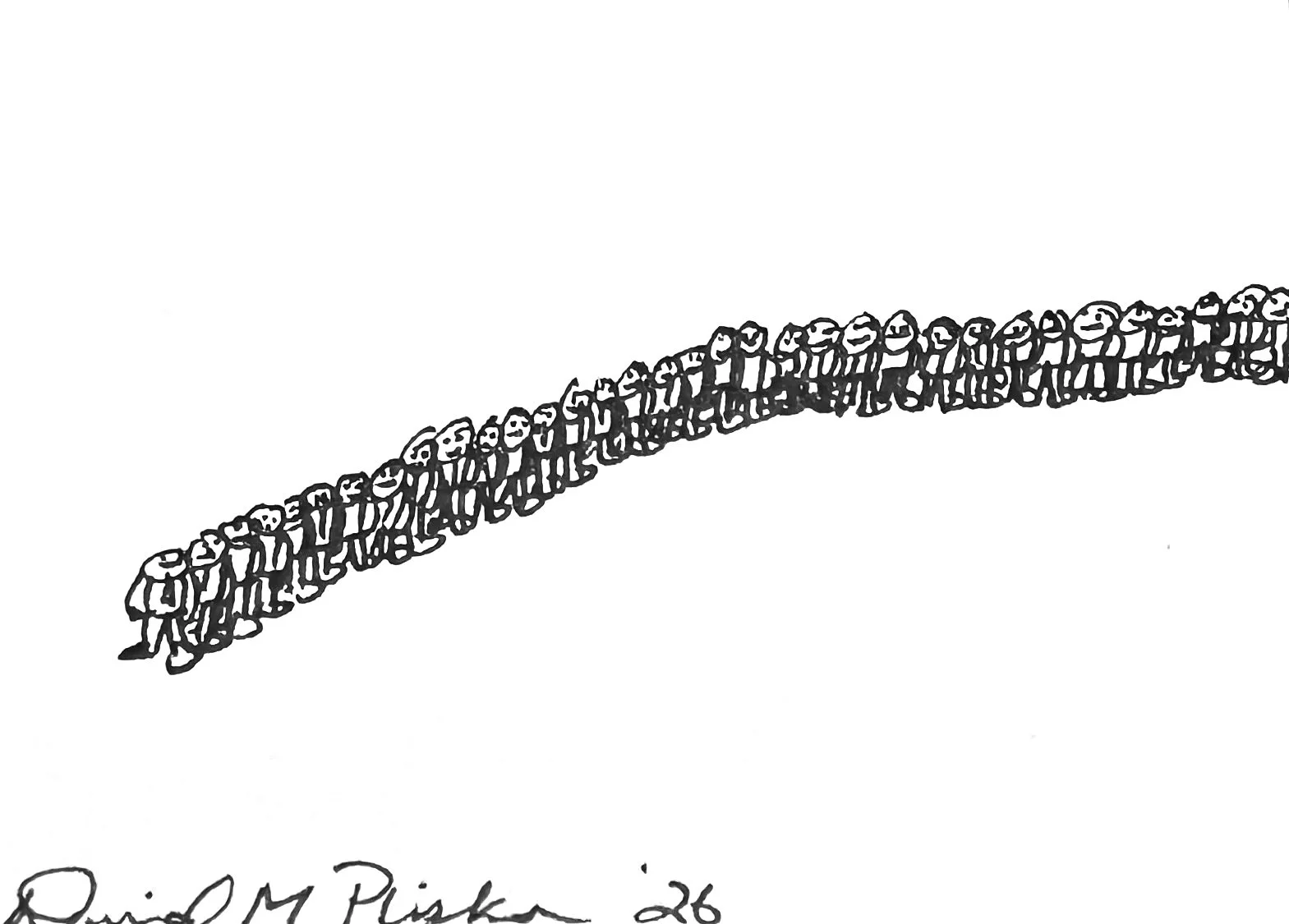
Little People in a Line.
300 Blues
So…for the past year and a half, I have had a painting sitting unfinished on my easel.
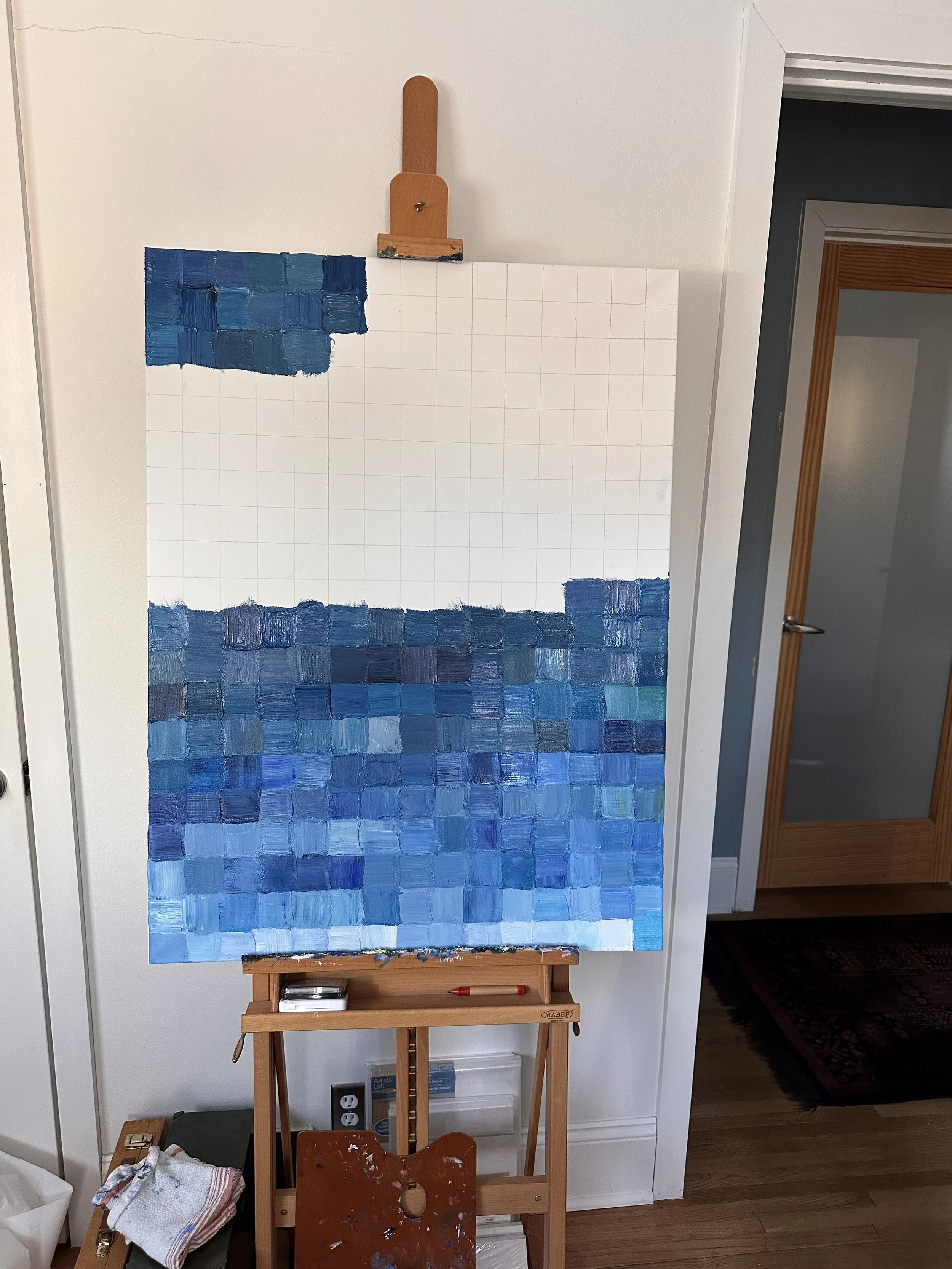
The unfinished painting.
As I have struggled with depression and anxiety, I slowly moved away from the things I once loved. One of those things was painting. Something that once brought me joy became something I simply stopped doing.
It wasn’t until I participated in art therapy during residential treatment that I started painting again. Once I picked up a brush, I remembered something important: I truly love to paint.
During treatment, I created a small “Blues” painting made up of 108 blue squares, painted in acrylics on canvas board. It reminded me how calming and meaningful the creative process could be.
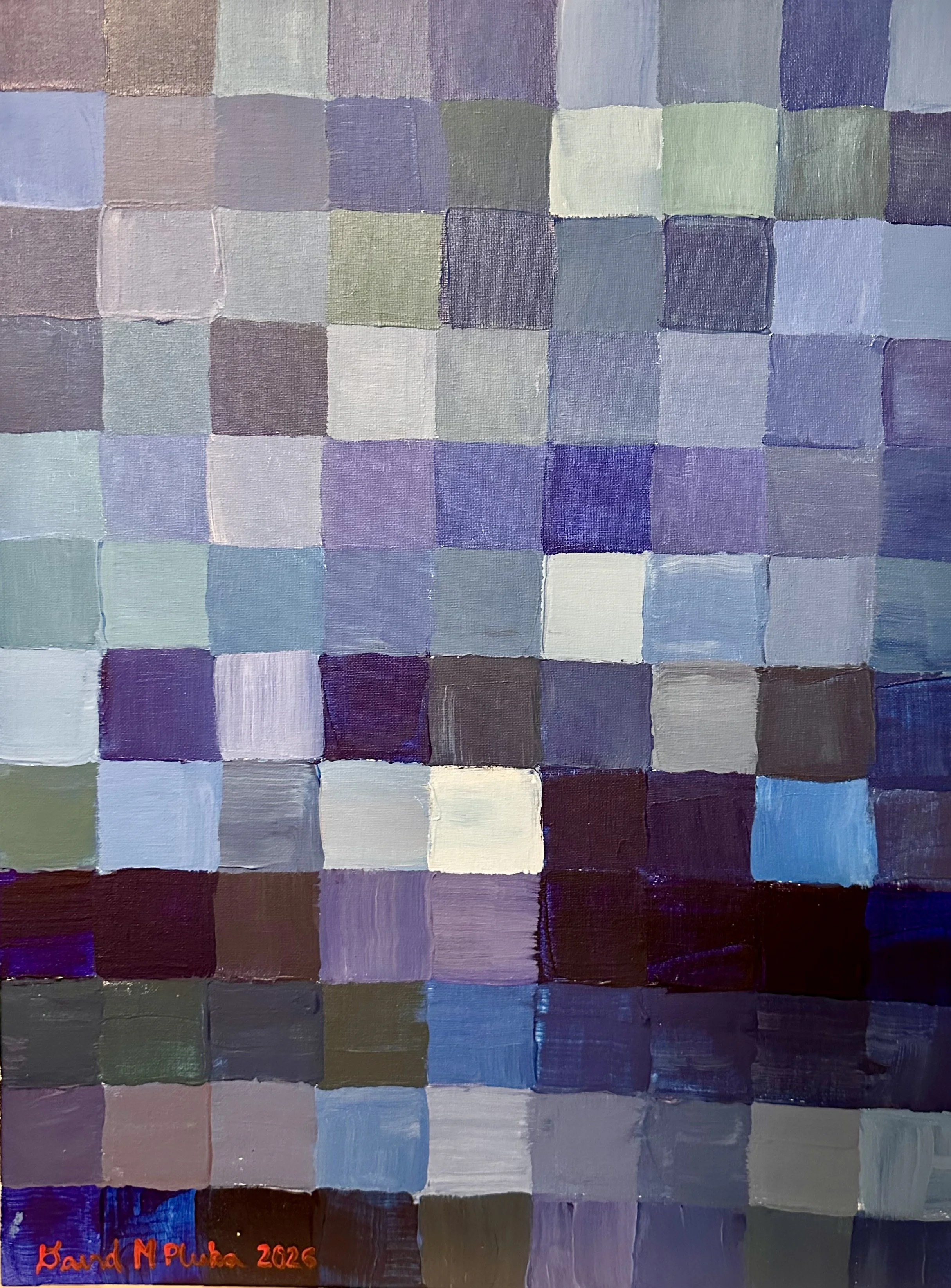
108 Blues
Since returning home, life has been busy, and I haven’t made much time to pull out the paints. Instead, I have been focusing on my “Little People” drawings. But this weekend, I finally had the time.
I spent several hours finishing the painting that had been waiting for me for so long. This piece consisted of 300 different shades of blue, each painted in two-inch-by-two-inch squares. It took a while, but I finished it.
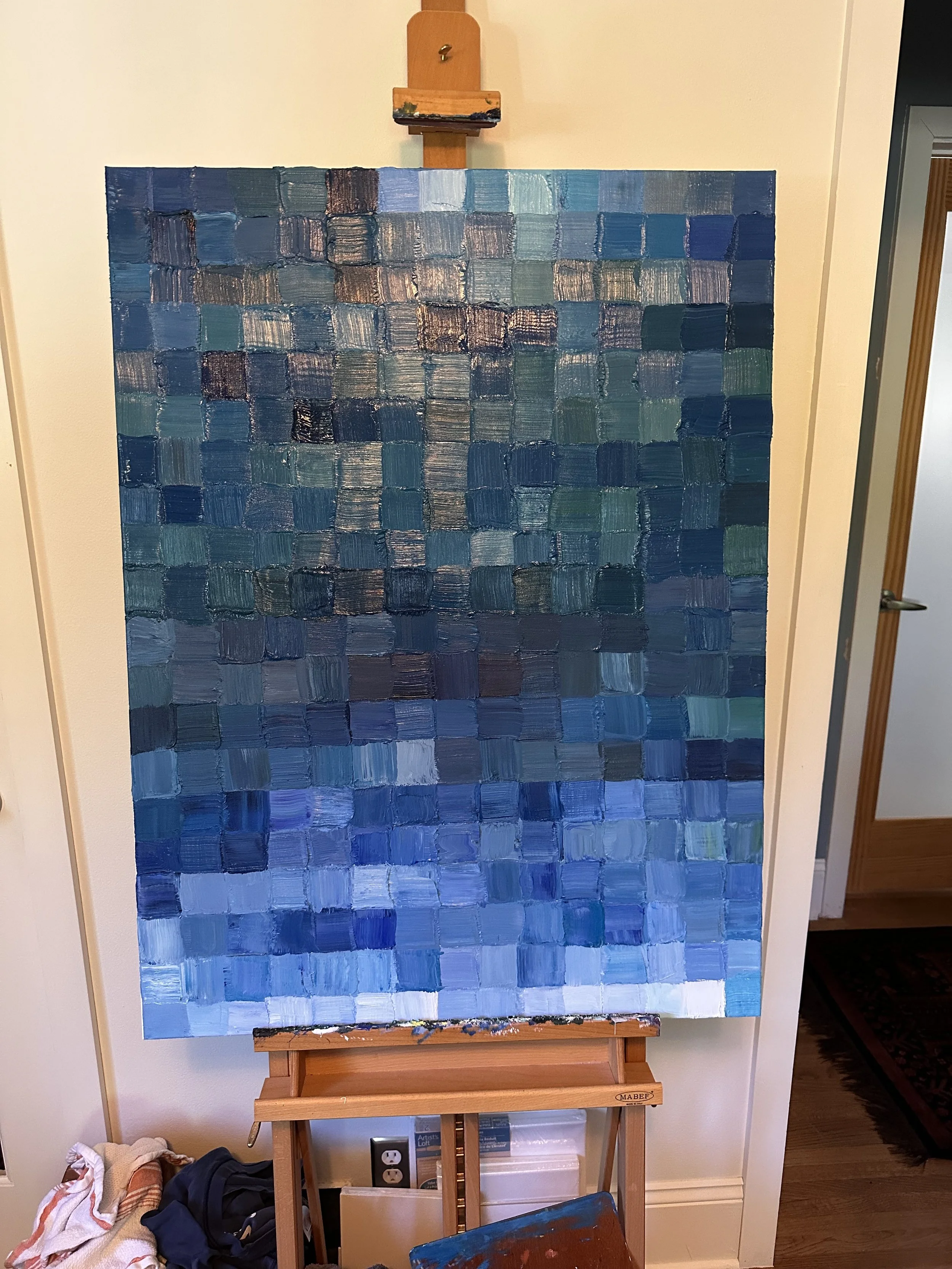
300 Blues—finished!
And honestly, it felt like a little win.
Recovery is often about small steps forward, and for me, this felt like one of them. Even better, I already have plans for my next painting. I’ll be sure to share it when it’s finished.
More later…
A Setback Does Not Mean Failure
So…If you have been following along, you know that I struggle with mental health. The transition from residential treatment back to home has been difficult and filled with challenges. I am trying, and even though I experience setbacks from time to time, I am still moving forward.
Recovery is not a one-time event. It is not something you accomplish once and then never think about again. Recovery is a daily choice—a daily fight. Some days are easier than others. Some days feel impossible.
There are moments when I feel like I just cannot keep going, when the mountain in front of me feels too steep to climb. Those are the moments when it becomes most important to lean on a support network. Friends, family, therapists, helplines, or anyone willing to sit with you in the hard moments can make a difference.
This weekend, I had a setback.
I am trying to learn from what happened and reflect on where I might have reached out for support or used crisis resources before the urges became overwhelming. I feel guilty and ashamed about what happened, but I also know I need to practice radical acceptance. It happened. I cannot change that. What I can do is try to understand it and move forward.
In that moment, I felt overwhelmed and alone, like I had nowhere to turn. It is a sickening feeling. I know that self-harm is not a healthy solution, but the urge felt incredibly strong. I wanted relief from the intensity of what I was feeling.
Next time—and realistically, there may be a next time—I want to remember that I can ask for help. That is the difficult part: asking. I worry about being seen as weak or “crazy,” even though I know that reaching out is neither of those things.
The truth is, sometimes I just need help.
And maybe part of recovery is learning that asking for help is not weakness—it is courage.
More later…
130 x
So…I have been struggling with self-harm urges since coming home from residential treatment. Until now, I had been able to manage those urges using my DBT skills. But yesterday and today felt different.
I fought them off for as long as I could, but the urges kept returning—stronger each time. I used the skills I have learned: STOP, opposite action, and intense exercise. I did everything I could to stay in control.
In the end, though, I relapsed.
At first, I saw it as a failure. But a friend reminded me that relapse is not failure—it is part of recovery. Healing is rarely a straight path. Sometimes we take a step backward. What matters is recognizing it, learning from it, and turning our focus back toward moving forward.
Recovery means continuing to try, even after difficult days. It means redoubling our efforts, using our skills again, and refusing to give up on ourselves.
What other choice do we have?
National Text Crisis Hotline: text CONNECT to 741741
More Later…
Me 1. Demons 0.
So…I have been struggling lately with urges to self-harm and suicidal ideation. Today, those urges felt especially intense. But this time, I used my skills.
I practiced STOP and opposite action. I followed my safety plan. I distracted myself with a very hot shower and gave myself enough time and space to calm down and regain control of my thoughts.
I had the razor blade in my hand.
And then, something different happened.
I set it down. I backed away. I chose not to make things worse.
To me, this was a major win.
In the past, I probably would have cut—at least a little. But this time, I didn’t. Not at all. That matters. It may not seem like much to someone else, but for me, it feels huge. Progress is not always dramatic; sometimes it looks like putting down the blade and surviving the moment.
Anna, you would be proud.
The hard part is that even though I am getting help, the urges are still there. I am in treatment, and I talk with my therapist at PHP, but it is different from individual therapy. There is only so much support available in those moments when everything feels overwhelming.
And honestly, I don’t always know what to do with these urges. I’m trying. I’m using my skills. I’m reaching for help. But I am still struggling to understand how to live with thoughts that feel so loud.
Still, today reminded me of something important: I can survive an urge. I can pause. I can choose differently. And maybe healing starts there—one hard-earned victory at a time.
More later…
PTSD and WET
So…I am currently attending a trauma Partial Hospitalization Program (PHP) for treatment of PTSD related to events that happened during my childhood and teenage years. It has been a difficult road, but I am trying to do the work of healing.
According to the American Psychological Association, Post-Traumatic Stress Disorder (PTSD) is:
“A disorder that may result when an individual lives through or witnesses an event in which they believe that there is a threat to life or physical integrity and safety and experiences fear, terror, or helplessness.”
PTSD symptoms can include reliving traumatic experiences through painful memories, flashbacks, or nightmares; avoiding reminders of the trauma; feeling emotionally numb or disconnected from others; and living in a constant state of heightened alertness. It can affect sleep, concentration, memory, and even bring feelings of guilt or shame.
For treatment, my program is using something called Written Exposure Therapy (WET). According to the U.S. Department of Veterans Affairs National Center for PTSD, WET is a short-term therapy in which a person writes about their traumatic experiences and the emotions connected to them over the course of five sessions.
The idea behind it is simple, though not easy: many people with PTSD avoid thinking about their trauma because it feels unbearable. Avoidance may help in the short term, but it often keeps the pain alive in the long run. WET works by helping a person gradually face those memories through writing, learning over time that the emotions, while painful, can be tolerated. The hope is that the memories become less overwhelming and less controlling.
I haven’t started the writing portion yet. That begins this week, and if I’m being honest, I’m anxious about it. Writing about trauma feels intimidating. I know there are things I have spent years trying not to think about, and now I am being asked to put them on paper.
At the same time, I’ve been struggling with urges to self-harm. The urges are there, and they are loud some days. But I am using my DBT skills—especially opposite action and STOP—and they are helping. I haven’t acted on the urges. That matters.
This part of healing is hard. Really hard. But I am still here, still fighting, and still trying. I can beat these demons.
More later…
Little People
So…for a while now, I’ve been creating little “Little People” drawings. What started as something simple has become surprisingly meaningful to me. I find drawing them incredibly relaxing, and it has turned into one of my favorite ways to cope when anxiety starts to creep in.
There is something calming about putting pen to paper and focusing on tiny details. It helps slow my mind down, gives me something gentle to focus on, and offers a healthy distraction when things feel overwhelming.
If you’d like to see them, you can find my collection on my Little People page. And if one speaks to you—or if you’d simply like one of your own—please let me know. I’d be happy to send one your way.
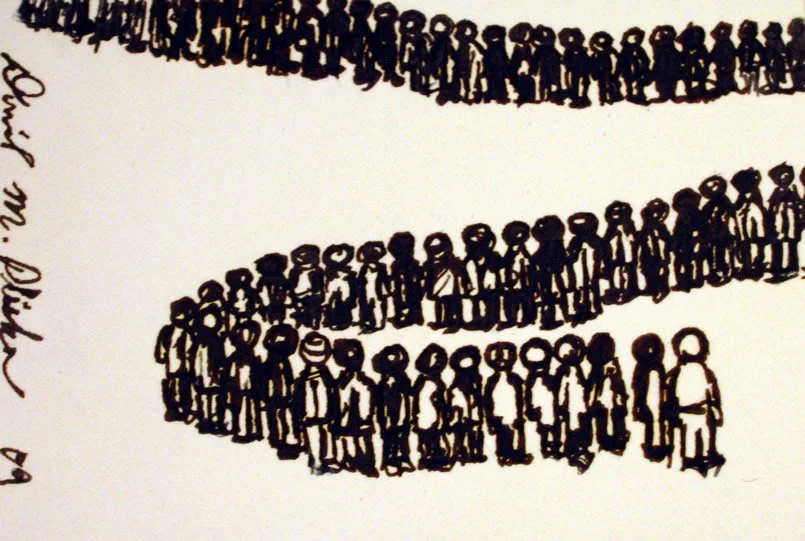
Little People Drawings
Anna
Dear Anna,
I could really use a friend like you right now. You’ve been there before, and you understand in a way most people never could. The demons are calling again, and I’m struggling to resist.
You never encouraged me back then, and I admire you for that more than you probably know. But that was another time, and everything feels different now. I’m alone, and they keep whispering my name. I don’t know if I’m strong enough to keep fighting.
There’s something seductive about it, isn’t there? The feeling on my skin, the rivers of color, the strange sense of release. Part of me is afraid I may return there again.
I wish I’d had the chance to say goodbye properly. So if I never hear from you again, goodbye, dear Anna. Goodbye.
Until another time,
David